Watching Spain’s victory over France in the semi-finals is not just watching a result. It is witnessing the culmination of a 40-year process that every football professional should analyse.
1. Elimination Before the Semi-finals
1980s / 1990s
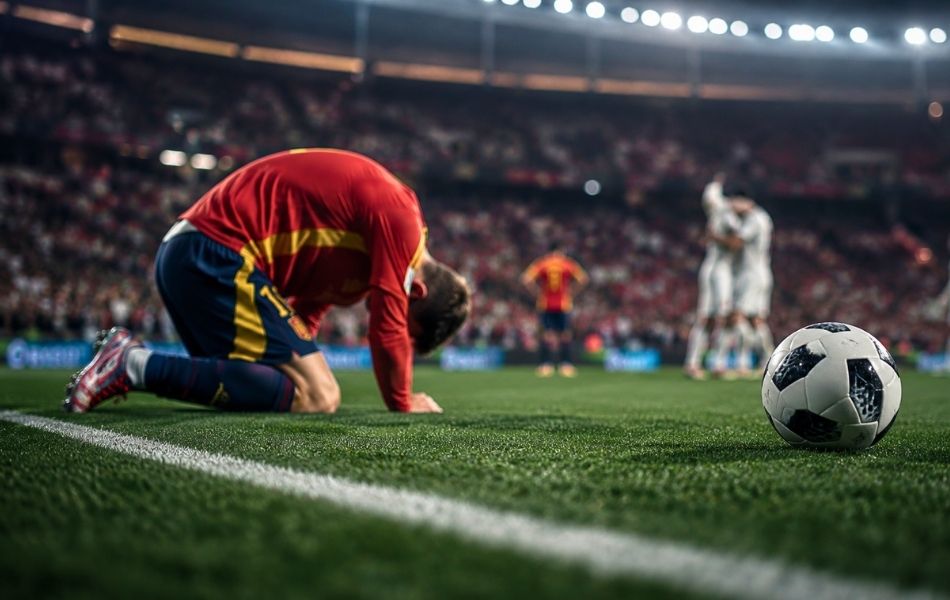
We kept coming up against a glass ceiling. It was not a lack of talent, but an invisible barrier: elimination always came in the quarter-finals and the inability to reach the semi-finals, together with the fear that the same unfortunate ending would happen again. This created a certain collective anxiety.
During this period, the national team had different philosophies under different managers. The common denominator of all these Spain teams before Luis Aragonés was that they all had great players and outstanding managers who came very close to breaking through that glass ceiling but never quite managed it.
2008
Luis Aragonés’ determination in his decisions to implement the positional play that became so important for Spain and for all its youth academies—where Johan Cruyff first planted the seed, Pep Guardiola later perfected it, and it was developed throughout Spanish football—together with adding greater verticality, faster transitions, changes of tempo and defensive intensity, marked the beginning of the new football that the Sage of Hortaleza had always sought.
The culmination of that masterpiece came with victory at UEFA EURO 2008 against the finest opponent and greatest representative of that other football: the magnificent German national team.
2010–2012
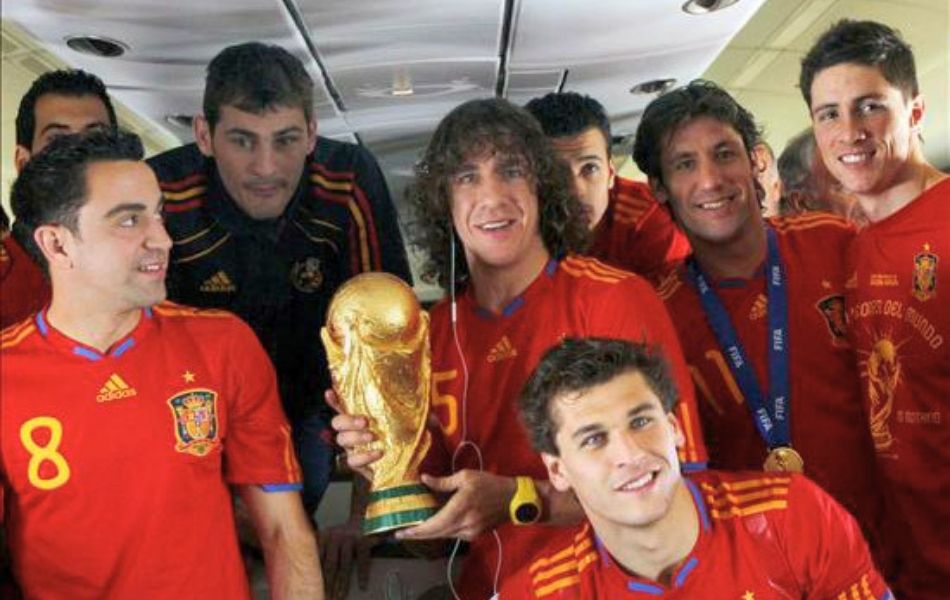
Vicente del Bosque’s Spain became World Champions. With the consolidation of the positional holding midfielder through Busquets alongside Xabi Alonso, and the alternation of Xavi and Iniesta, Spain firmly established itself around positional play, combining different tempos while giving great importance to patience in possession.
Changes of pace continued to be essential, with players such as Pedro and Villa leading the attack with their speed and constant movement. Spain reached the summit of world football by becoming World Champions and established itself as the greatest exponent of positional play through the tactical variation of the double pivot.
In 2012, the model evolved even further with the successful implementation of a system without a traditional centre-forward, relying instead on absolute positional play and perfectly timed runs from midfield.
This tactical innovation gave Spain greater control and dominance of matches, while increasing attacking aggression by constantly generating and creating goalscoring opportunities through second-line runs.
2013–2022
Once our identity had been firmly established and reaffirmed thanks to winning the 2010 World Cup and the UEFA European Championships in 2008 and 2012, we entered a period in which our obsession with positional play and ball possession was no longer consistent with controlling the game. We became more predictable, and this characteristic ultimately worked against us, culminating in our elimination by Morocco in the Round of 16.
The Spanish national team showed a certain degree of verticality during UEFA EURO 2020, reaching the semi-finals against Italy, but it was not enough to secure victory and a place in the final.
In 2022, Spain were eliminated by Morocco after becoming highly predictable, trapped by positional play and becoming excessively easy to read.
Between 2022 and 2024, Luis de la Fuente and his coaching staff began searching for ways to reduce that predictability and break away from the idea that had become deeply ingrained in Spanish football.
The most important tactical innovation was the introduction of the Rodri–Fabián double pivot, together with the idea of creating greater width and delivering more crosses—not simply maintaining positional occupation—through the inclusion of Jesús Navas at right-back and Jordi Alba on the left.
Spanish football was searching for the right balance between positional play through the middle and positional play down the wings, using the wide areas not only to stretch the opposition but also to create crossing opportunities through Jesús Navas on the right and Jordi Alba on the left.
There were also more frequent runs into finishing positions from the two holding midfielders, something that had not previously been common because the midfield structure usually involved attacking midfielders positioned ahead of them.
UEFA EURO 2024
UEFA EURO 2024 marked the culmination of the balance between positional play and efficiency.
Positional play down the wings became not only a tool to create space for players operating inside, but also a major attacking weapon, both through the ability of the wide players to beat defenders while attacking diagonally and finishing repeatedly, and through crosses delivered from the wings.
The introduction of a true attacking midfielder completed that midfield triangle. Up front, Spain continued to rely on a hardworking striker with excellent mobility.
The constant arrivals of both holding midfielders into attacking areas, together with fast transitions and continuous play down the wings, turned Luis de la Fuente’s Spain into a team that abandoned the idea of unlimited possession as the most important weapon for hurting opponents, in the same way that Luis Aragonés removed Spain’s psychological barrier of breaking through the quarter-finals and becoming champions by playing fast, vertical and relentless football.
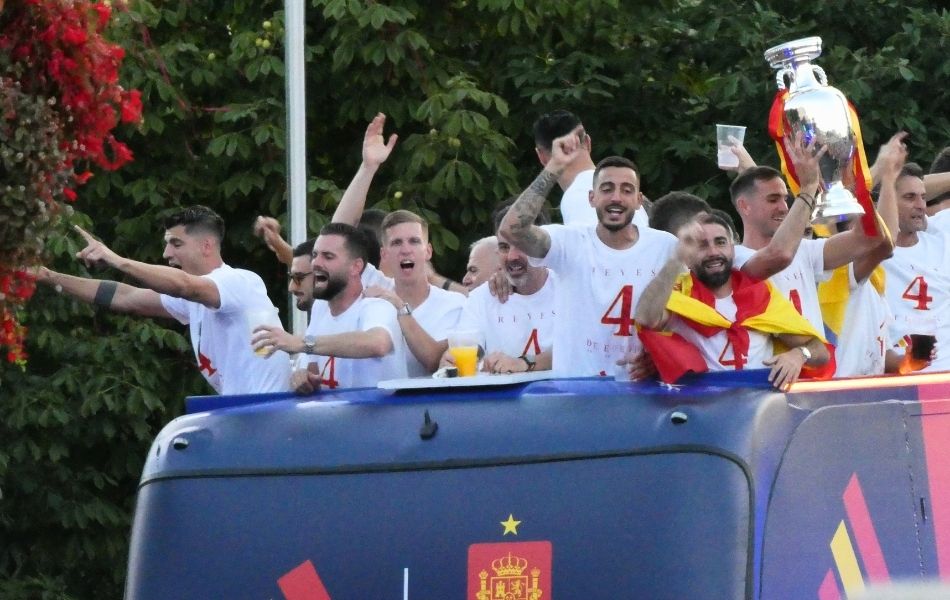
Luis de la Fuente and his coaching staff have turned the national team into a winning side using completely different weapons from those employed previously.
That is his greatest achievement.
World Cup 2026: A Mature National Team
In this 2026 World Cup, regardless of what happens in Sunday’s final on the 19th, our Spanish national team—everyone’s national team—has come of age.
I do not mean that in a negative sense, nor does it have anything to do with age, because this is a young team. I mean maturity.
I mean exactly what the Sage of Hortaleza used to speak about: what the national team had to aspire to, mastering the other football.
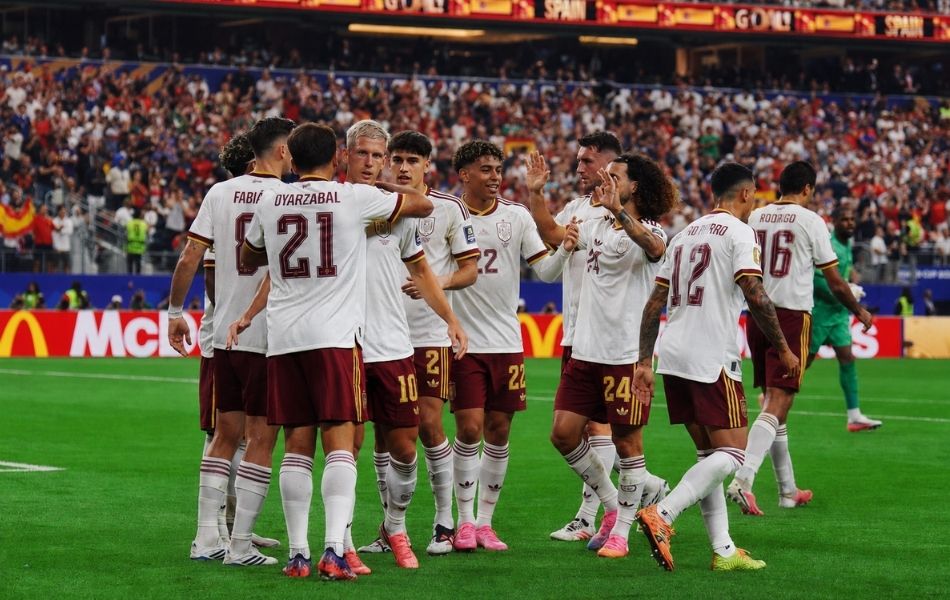
That moment has now arrived.
The Spanish national team has become the Germany that we always used as the example. The team behind the famous saying that football is a sport in which Germany always wins.
Today, that saying is perfectly compatible with Spain.
The double pivot, those two players who seem like kindred spirits and understand each other with just a glance—Rodri and Fabián—together with an attacking midfielder like Dani Olmo dropping into deeper areas to help create play whenever necessary.
A midfielder such as Álex Baena creating play mainly from the left, predominantly through the inside channels but also alternating out wide.
Lamine Yamal providing width and constantly looking to attack from the outside.
A striker like Mikel Oyarzabal, with his outstanding work ethic, tireless commitment and technical-tactical intelligence, gives enormous importance to the role of the centre-forward.
With that defensive solidity and the exponential improvement of Unai Simón, Spain have conceded only one goal throughout the tournament so far.
They have managed to control matches from start to finish, both offensively and defensively, thanks to their competitiveness, always taking the game at the tempo that suited them best and preventing a team as strong as France—an outstanding side—from developing their attacking football. France were completely controlled by Spain through experience, composure and the genuine leadership shown by the Spanish team.
You may shine more or less during a match, but we have begun to feel certain that the decisive moment to deliver the final blow will arrive. That is the true characteristic of this national team: the ability to manage every moment of the game, particularly given the challenge of the extreme temperatures, which are so damaging for playing football.
With Rodri no longer arriving in finishing positions as he did during the previous European Championship, instead operating as a true anchor and demonstrating himself to be a leader within Spain’s positional play, and with Fabián positioned slightly higher without overcrowding the central areas as happened in previous years.
Defensively—an aspect of enormous importance throughout this tournament—Spain have always taken the initiative, controlling and neutralising every one of their opponents’ attacking strengths, primarily through intelligent use of the ball, excellent positioning, outstanding concentration and tremendous experience. These qualities have transformed Spain into a truly formidable competitive team.
This national team is the closest thing to the Germany that used to win everything—the “other football” that Luis Aragonés always aspired to.
A mature team with the ability to suffer when necessary without ever losing its organisation, maintaining the game plan at all times and always knowing exactly what it wanted to achieve.
That composure is the culmination of the “other football” that Luis Aragonés always spoke about.
2. Mentality: Resilience as a Competitive Asset
The Spain that defeated France demonstrated the ability to suffer without ever losing its organisation. A mature team that does not panic under the pressure of the opposition, remaining faithful to its game plan throughout the match.
That composure is the true victory.
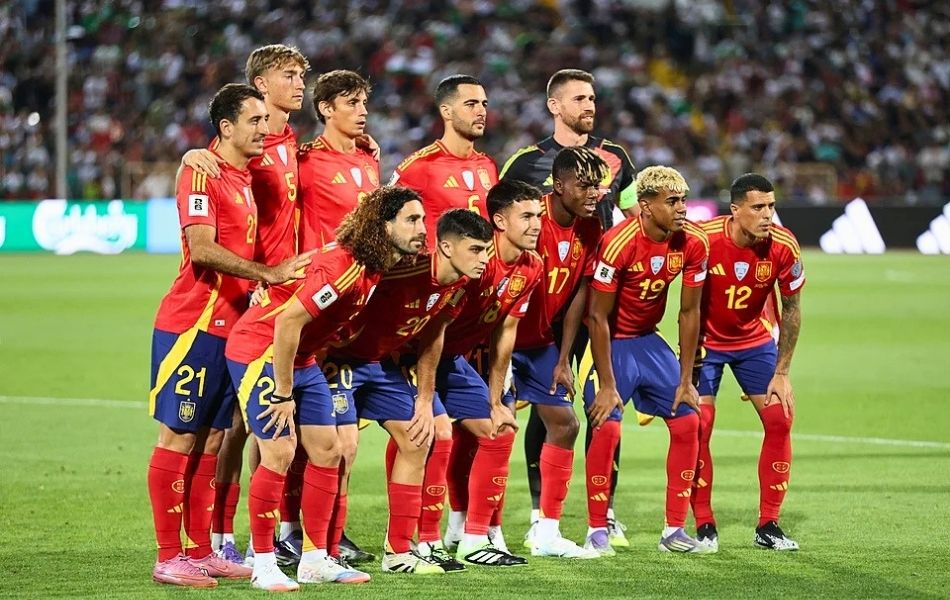
3. Dressing Room Management
The majority of the players had played a significant role during UEFA EURO 2024, allowing the squad to become fully integrated.
However, this 2026 World Cup has involved a less democratic approach, so to speak, and a more functional management of the squad, always seeking the specific performance required at particular moments while ensuring that every member of the group maintained the mentality necessary to achieve the ultimate objective of becoming World Champions.
This is a tremendous achievement by every single member of the Spanish squad, and especially by the coaching staff led by Luis de la Fuente.
They have kept every player fully focused and mentally prepared, even those who have played very little—or not at all—ensuring that each individual, regardless of their role, remained committed to the common objective.
4. Lessons for Youth Football
What does all this teach us about youth football?
Technical and Tactical Intelligence Must Always Be Developed with Competitiveness in Mind
Technical and tactical intelligence should always be developed with the objective of becoming as competitive as possible. There is no system or methodology that is infallible; football is constantly evolving.
Football Is a Team Sport
Football is a team sport. The identity of Spanish football is continuously evolving, and the common denominator of every successful Spanish national team has always been the collective spirit and the strength of the team.
The Team Comes Before Individual Ego
Top players such as those in this Spain squad are capable of setting aside part of their ego in pursuit of a common objective.
Players such as Lamine Yamal, an outstanding and courageous footballer, are willing to work for the team even when they are not shining individually.
The attitude shown by Zubimendi, despite having won the Premier League, or by Pedri, accepting a less prominent role while maintaining the highest level of commitment whether he plays or not, are clear examples of this mentality.
Accepting and Performing Your Role Is Also Part of Winning
A player’s ability to accept and successfully perform the specific role required by the team is just as important for those who play regularly as it is for those who play very little.
The Coach Must Lead with Empathy and Conviction
The coaching staff must have enough empathy to explain the situation to the player who is not playing, while also showing enough leadership to ensure that the player continues believing in the project and, therefore, in the group.
Only then will the group continue believing in one another.
Discipline Remains the Most Practical Route to Success
There are many different models of teams that have become champions, but the easiest and most pragmatic way of achieving success is to be as disciplined as possible, both on and off the pitch.
Coaches Shape the Future of Their Players
The current model of the Spanish national team has been built in the image of its head coach, who has gradually evolved towards a different way of playing.
Likewise, youth football coaches and player developers will lead their players wherever they choose to take them, carrying an enormous responsibility not only for their football careers, but also for their lives.