Can the technical-tactical intelligence of the Spanish model be applied to British grassroots football without erasing its identity?
After more than a decade working in British grassroots football since 2012, the answer is clear: it is not about imposing models, but about hybridising worlds.
Today, grassroots football demands spatial awareness, decision-making and mental agility, with the Spanish model standing as a clear example, rooted in the emergence of Johan Cruyff’s positional football and extending to the current winning mentality of Luis de la Fuente.
What is positional play?
Positional play is a collective technical-tactical concept whose objective is to control the game through the rational and hierarchical occupation of space.

And why has it taken root so successfully in Spain since 1988?
Its development was not a technical-tactical coincidence, but rather the reflection of a deep symbiosis with the country’s anthropological and cultural structure:
The reflection of an orderly society and shared space: Spanish society at that time, characterised by being an orderly society, was based on strong socialisation in streets, squares and compact urban environments, where constant interaction required an intuitive and harmonious occupation of space.
In positional play, players are organised according to space. That cultural habit of sharing, occupying and moving through public spaces while constantly interacting, adapting and coexisting harmoniously in more or less confined environments was transferred organically onto the pitch. Technical-tactical problems were understood as something to be solved through an understanding with teammates, using rational occupation of space and passing.
Physical compensation through technical-tactical intelligence
Anthropologically, the physical profile of the Spanish player did not compete through raw athletic power or excessive physical output when compared with other European archetypes. Faced with this biological reality, society and its development structures channelled progress towards what they could enhance: technical-tactical intelligence and, therefore, cognitive agility.
Positional play was a perfect fit because it is, in essence, a collective technical-tactical model that uses the rational and dynamic occupation of space to compensate for physical inferiority with technical-tactical astuteness and structural superiority. This is achieved by organising and distributing players optimally across the pitch, occupying key spaces and maintaining the correct distances to overcome the opposition and facilitate the progression of play.
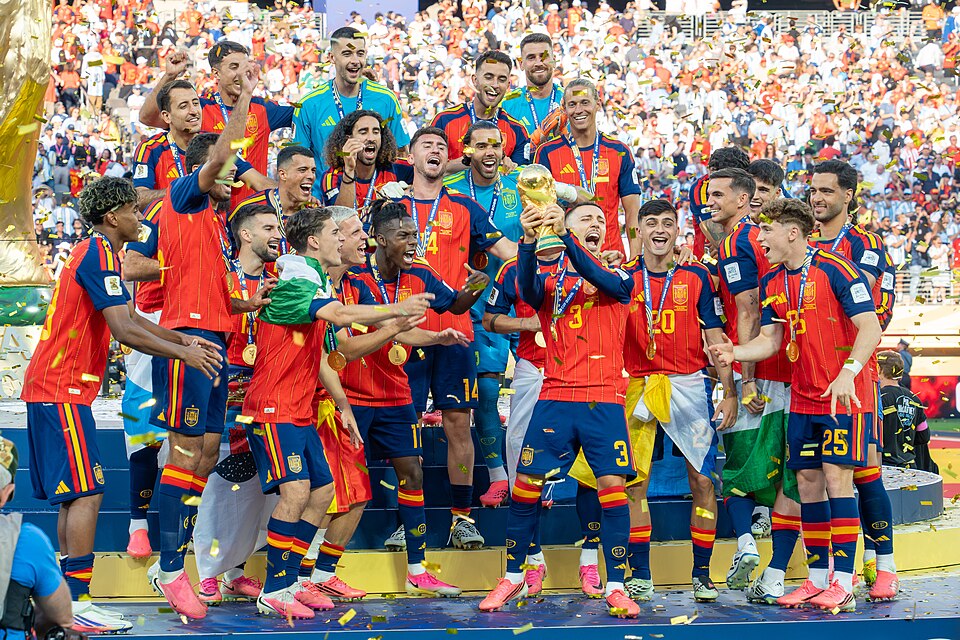
Photo: Bryan Berlin / Wikimedia Commons — CC BY-SA 4.0
From the “executor” to the “thinking agent”
Social evolution towards an environment of greater communication and collective participation was transferred directly onto the pitch, creating a player capable of interpreting match situations and therefore making technical-tactical decisions, developing their technical-tactical intelligence in full harmony with the team’s structure.
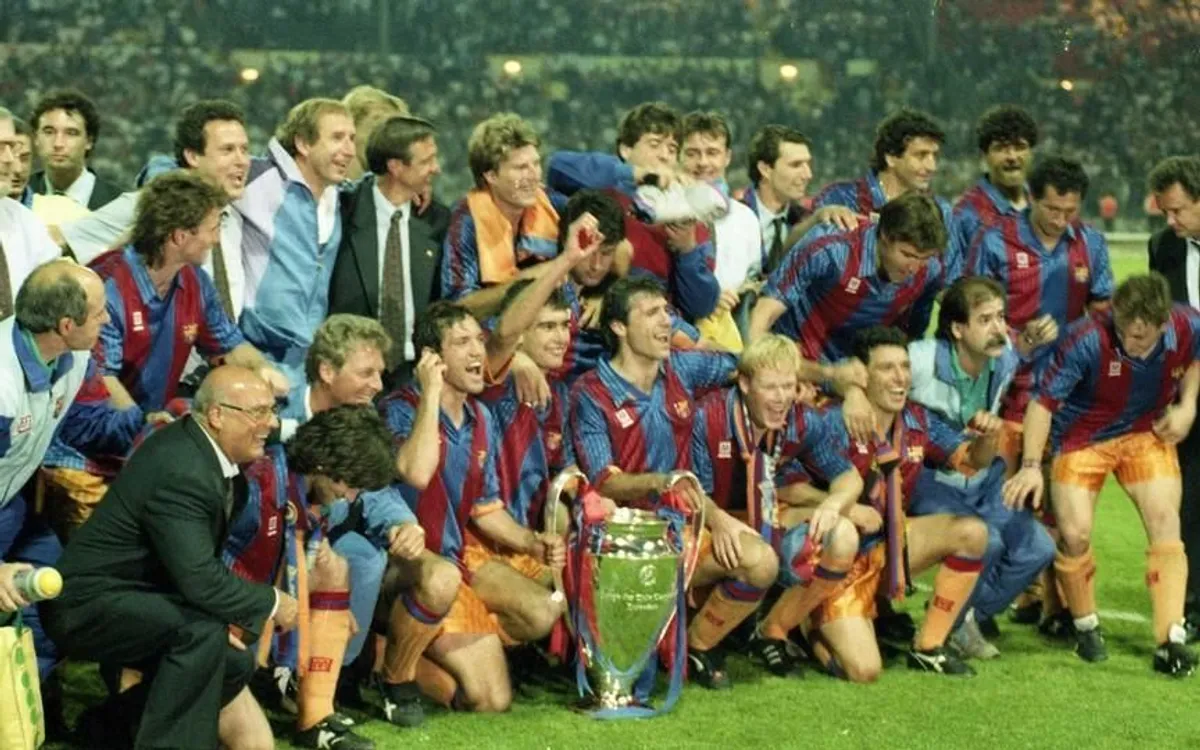
Although Johan Cruyff brought the revolutionary blueprint of positional play from abroad, with some pioneering domestic notions of this style already existing beforehand, the model took root successfully because it was not a forced imposition. Instead, it connected naturally with the way people were, the tendency to understand space as a living board with which one coexists, adapts and interacts actively and fluidly, and the need for ingenuity within Spanish society and grassroots football. It found fertile ground in local talent, which made the idea its own.
However, this model cannot be imposed in its entirety within the Anglo-Saxon context.
THE ANGLO-SAXON CONTEXT
From nursery and throughout the education system, its culture naturally encourages autonomy, individuality, freedom of movement, active learning through action ( learning by doing, through which individuals gain confidence in real time while developing great independence and personal initiative) personal initiative and the autonomous resolution of problems, together with a non-negotiable physical intensity rooted in its deep historical tradition of multi-sport demands.
This context is reflected in a style of football characterised by verticality, a relentless pace, the constant pursuit of individual duels and fast transitions. It encourages an integrative approach that, far from restricting the team within a positional pattern that slows down its constant movement, builds bridges between collective technical-tactical discipline and freedom of action. This means designing tasks in which technical-tactical order does not suppress creativity, but enhances it, intelligently respecting and channelling the British player’s natural initiative, practical and natural intelligence, and explosive speed of movement.
British grassroots football
Here in lies the key for the Spanish coach working in British grassroots football: the hybridisation of the Spanish model’s technical-tactical intelligence and competitiveness with British problem-solving intelligence (autonomous and situational) and competitive intensity. This British competitive intensity is structured around three key points:
Where it comes from: it stems from the historic tradition of British public schools and an educational model based on multi-sport demands and physical effort as tools for shaping character.
What it depends on: it is supported by a culture that prioritises active learning (learning by doing) autonomy and personal initiative.
How it is characterised in football: it is reflected in a style of play with a relentless pace, high verticality, constant individual duels and fast transitions, demanding permanent physical effort.
CONCLUSION
The conclusion after coaching in Spain, Morocco and England is clear: methodologies are not transplanted rigidly; they are hybridised to enrich talent and become more competitive without stifling the player’s cultural context.
Tomás Ruiz- Head Coach of Football School Cañada Blanch